ADMA2025 Keynotes
Keynote 1 (Day 1)

Title
Human-AI Collaboration for Data-Driven and Collective Decision Making
Abstract
Artificial intelligence has become deeply involved in decision-making across diverse domains of society. As this trend continues, it is increasingly important to establish frameworks in which humans and AI complement each other and work together to support rational and fair decision making. In this talk, I will present several studies that explore how AI can leverage human perceptions and judgments to enhance and extend human decision-making. First, I will introduce methods that learn data representations from human similarity judgments. These methods allow AI to capture subjective and multi-faceted perspectives. Second, I will discuss human-in-the-loop approaches for evaluating explainable AI (XAI), which address the limitations of automated evaluation metrics by directly measuring human interpretability. Third, I will highlight the use of large language models in supporting collective decision making. This approach is further enhanced by combining them with multi-criteria evaluation methods. I will also discuss the emerging direction of automated mechanism design, in which AI learns effective mediation mechanisms from case data to facilitate consensus among human groups.
Biography
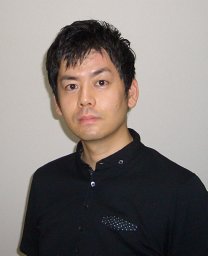
Hisashi Kashima is a Professor at the Graduate School of Informatics, Kyoto University. His research focuses on the foundations of machine learning and data science, and their broad applications to science and industry. He received his B.S., M.S., and Ph.D. in Informatics from Kyoto University.
Keynote 2 (Day 1)
Title
Reliable Machine Learning from Imperfect Supervision
Abstract
In recent machine learning applications, it is often challenging to collect a large amount of high-quality labeled data. However, learning from unlabeled data is not necessarily reliable. To overcome this problem, the use of imperfect data is promising. In this talk, I will review our recent research on reliable machine learning from imperfect supervision, including weakly supervised learning, noisy label learning, and transfer learning. Finally, I will discuss how machine learning research should evolve in the era of large foundation models.
Biography
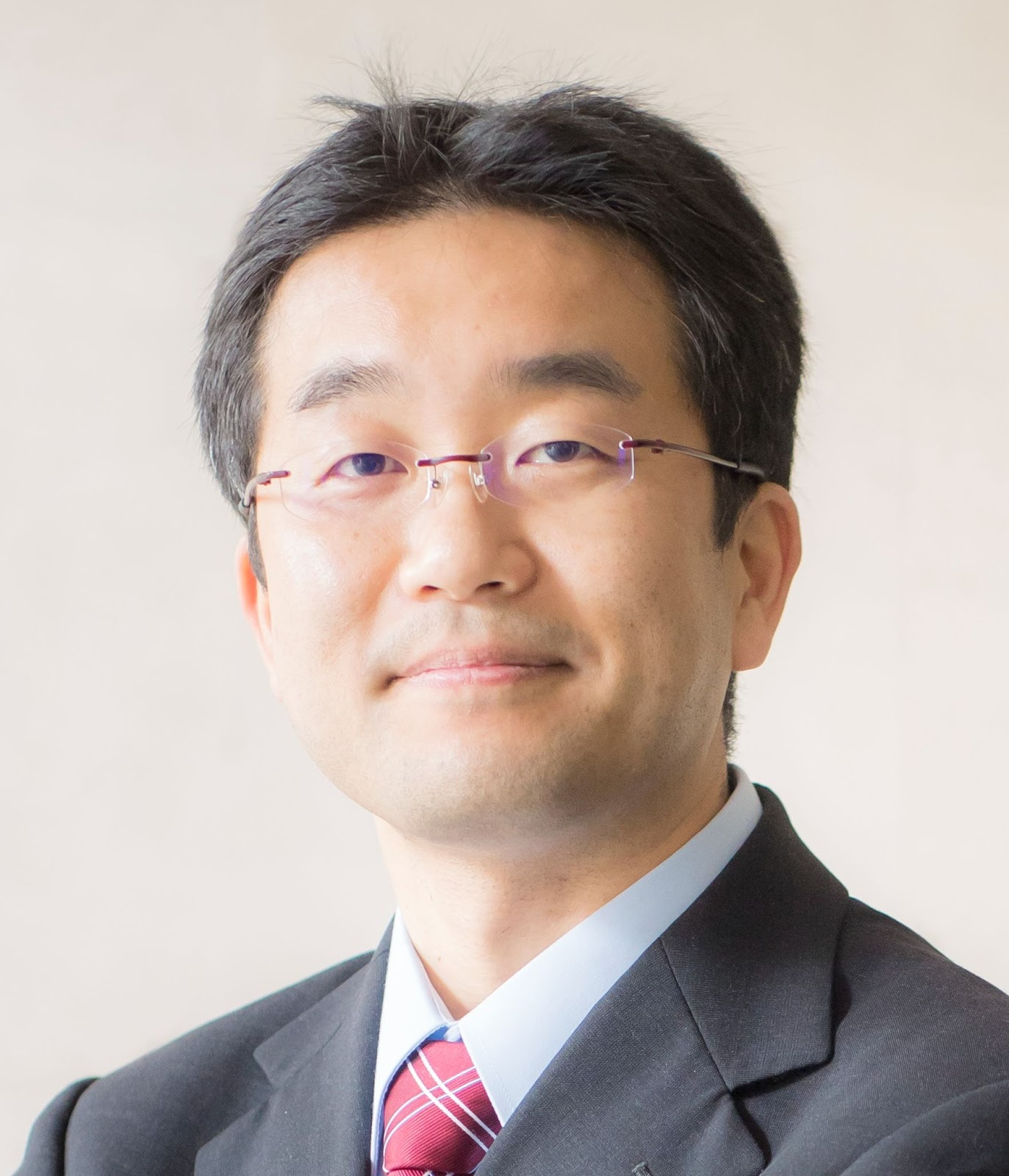
Masashi Sugiyama received his Ph.D. in Computer Science from Tokyo Institute of Technology, Japan, in 2001. After serving as an assistant and associate professor at the same institute, he became a professor at the University of Tokyo in 2014. Since 2016, he has also served as the director of the RIKEN Center for Advanced Intelligence Project. His research interests include theories and algorithms of machine learning. He was awarded the Japan Academy Medal in 2017 and the Commendation for Science and Technology by the Minister of Education, Culture, Sports, Science and Technology of Japan in 2022.
Keynote 3 (Day 2)
Title
From Data Mining to Explainable AI: Association Rules as Post-hoc Explainers
Abstract
Machine Learning (ML) is no longer just a buzzword; it has become mainstream, with an estimated 48% of businesses worldwide—across manufacturing, finance, healthcare, transportation, etc. —adopting it. However, this rapid uptake has often relied on opaque “black-box” models, used without transparency or explanations for their automated decisions. The growing demand for interpretability has made explainability not only desirable but also, in many contexts, a legal requirement. Existing post-hoc explanation techniques attempt to address this need but are frequently inconsistent or misaligned with the underlying models. While machine learning often grabs the spotlight, data mining quietly powers many of its successes. In this presentation, I demonstrate how a foundational task from traditional data mining—association rule mining—can serve as the basis for a model-agnostic post-hoc explainer. This approach not only generates human-understandable rules to explain predictions but also provides counterfactuals that clarify why alternative decisions were not made.
Biography
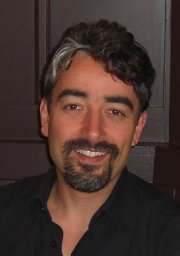
Osmar R. Zaïane is a Professor in Computing Science at the University of Alberta, Canada, Fellow of the Alberta Machine Intelligence Institute (Amii), and Canada CIFAR AI Chair. He is also a Fellow of the Canadian Academy of Engineering. Dr. Zaiane obtained his Ph.D. from Simon Fraser University, Canada, in 1999. He has published more than 450 papers in refereed international conferences and journals. He is Associate Editor of many International Journals on data mining and data analytics and served as program chair and general chair for scores of international conferences in the field of knowledge discovery and data mining. Dr. Zaiane received numerous awards including the Killam Professorship award, the McCalla Research Professorship, a Lifetime Achievement Award from CAIAC and CS-CAN, and the ACM SIGKDD Service Award from the ACM Special Interest Group on Data Mining, which runs the world’s premier data science, big data, and data mining association and conference.
Keynote 4 (Day 2)
Title
The Potentials and Challenges of AI x Cybersecurity
Abstract
AI is a transformative force reshaping computer science. Its intersection with cybersecurity, spanning every tech stack layer, is inevitable and complex. This talk explores the two sides of this "AI x Cybersecurity" coin: the potentials it unlocks and the challenges it presents. We begin with AI's potential to revolutionize security practices. By automating complex tasks, performing massive-scale analysis, and detecting subtle threats that often evade human experts, AI-driven tools enable a proactive, intelligent approach to defense. Yet, this progress comes with considerable peril. AI not only amplifies existing threats by enhancing adversarial capabilities, such as crafting sophisticated attacks or exploiting vulnerabilities, but also introduces new attack surfaces, susceptible to exploitation that may expose private data or trigger harmful, unintended behaviors. Given such duality, we report recent progress on these frontiers and share thoughts toward building secure foundations for modern AI services.
Biography
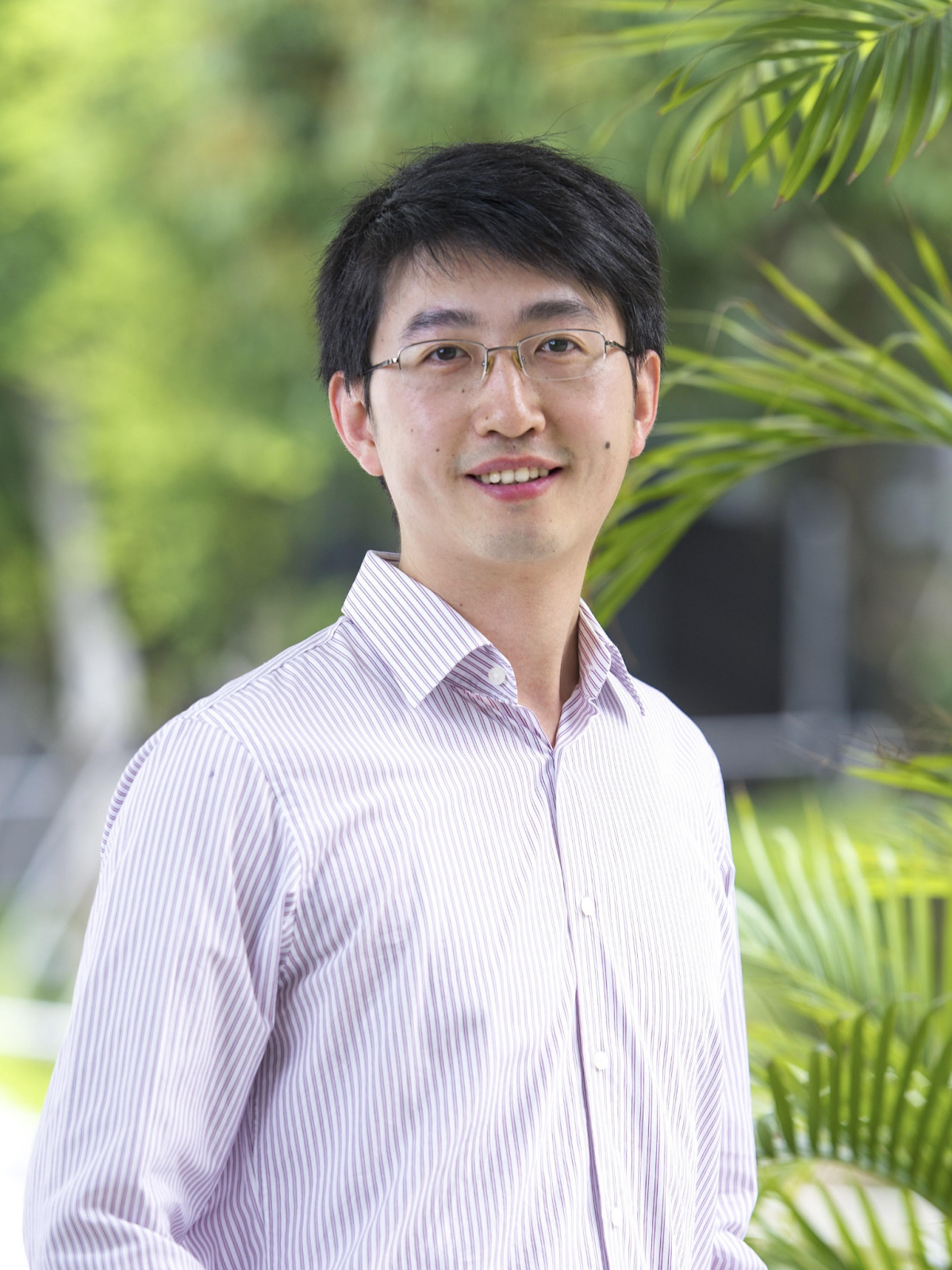
Prof. Cong Wang is a Chair Professor and the Head of Computer Science Department at City University of Hong Kong. His research spans data security and privacy, AI systems and security, and blockchain and decentralized application security. He is an IEEE Fellow, a HK RGC Research Fellow, a Founding Member of the Hong Kong Young Academy of Sciences, and a co-recipient of the 2024 BOCHK Science and Technology Innovation Prize. He has served as the Editor-in-Chief of IEEE Transactions on Dependable and Secure Computing, a leading security journal within the IEEE Computer Society. He is also a senior scientist at The Laboratory for AI-Powered Financial Technologies (AIFT), and a member of the Central Bank Digital Currency (CBDC) Expert Group appointed by the Hong Kong Monetary Authority.
Keynote 5 (Day 3)
Title
Responsible Data Sharing with Differential Privacy
Abstract
In the digital age, the widespread collection and analysis of data pose significant privacy challenges. Differential privacy (DP) has emerged as a leading framework for ensuring that information release does not compromise individual privacy. In this talk, we will delve into the theoretical and practical aspects of achieving DP from a data management perspective. We will start by examining database reconstruction attacks and their implications. We will then explore the design of DP query processing techniques, as well as the generation of synthetic databases under DP. Finally, we will discuss future directions for research in DP data management.
Biography
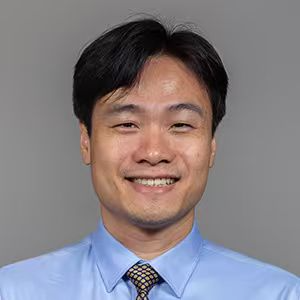
Xiaokui Xiao is a professor at the School of Computing, National University of Singapore. His research focuses on data management and analytics, especially on data privacy and algorithms for large data. He is a co-recipient of the VLDB 2021 Best Research Paper Award, the 2022 ACM SIGMOD Research Highlight Award, and the 2024 ACM SIGMOD Test-of-Time Award. He is an IEEE fellow, an ACM distinguished member, and a trustee of the VLDB Endowment.